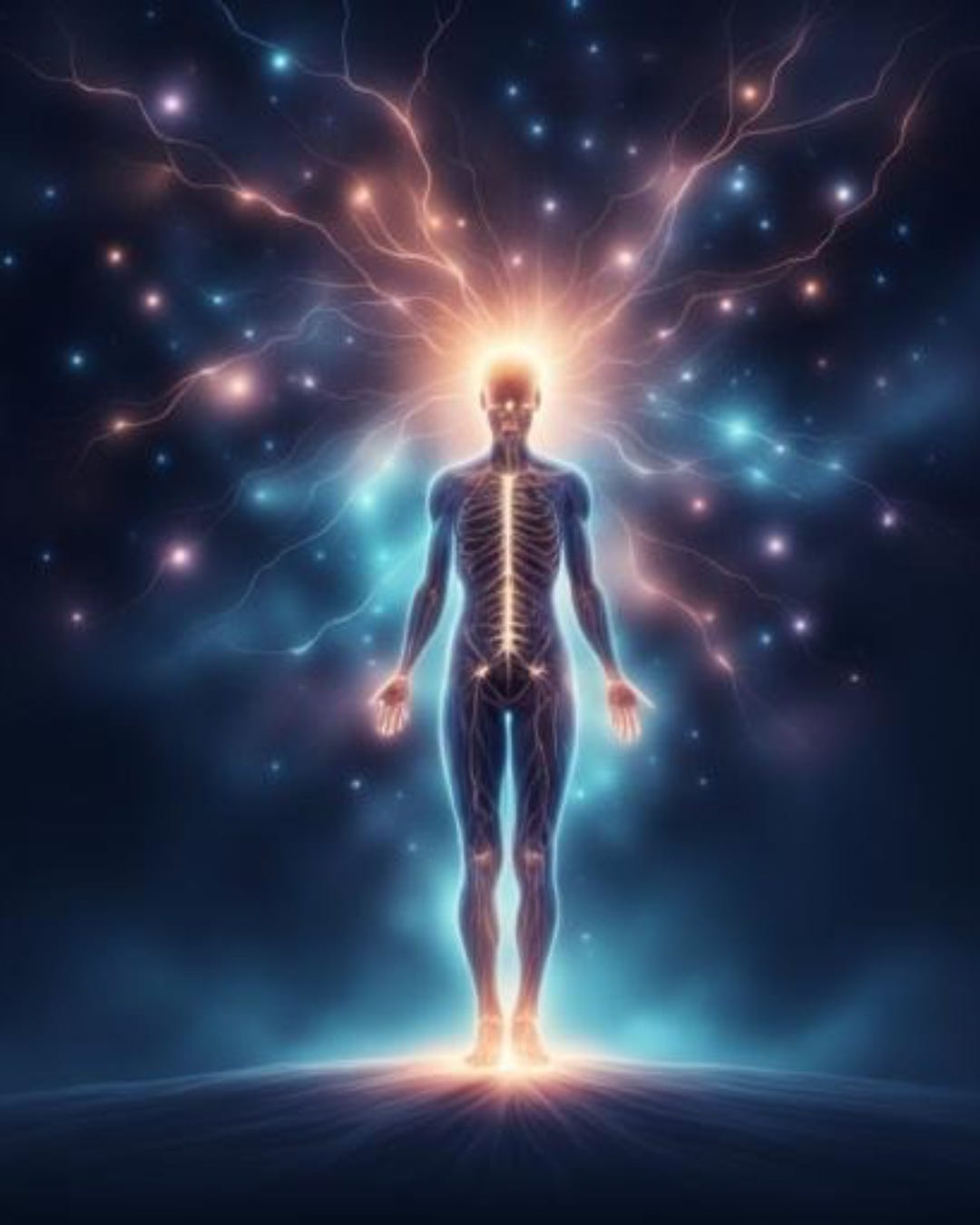
The Empath’s Evolution:
A Jungian Guide to the Empaths Spiritual Evolution

The path of the empath is rarely something we choose.
Most of us simply wake up one day and realize we’ve been walking it all along.
For years, I didn’t understand why my body reacted so intensely to the world around me. I didn’t know why I needed so much solitude, why panic attacks came out of nowhere, or why I felt like a hermit in a world that demanded constant interaction. But the moment I realized I was absorbing everything—people’s emotions, environments, unspoken tensions—something clicked.
I wasn’t broken.
I was sensitive, porous, attuned.
And once I understood that my body needed regular energetic calibration, it felt like a weight lifted off my shoulders. My “quirks” weren’t flaws—they were signals. They were invitations to care for myself differently.
Of course, life happens. I forget my practices. I drift. I disconnect.
But every time I return—every time I remember—I feel myself again.
Grounded. Clear. Capable of offering healing instead of drowning in overwhelm.
The aura I once honed so carefully begins to glow again.
Recently, in exploring the evolution of the empath, I kept encountering a term that at first felt intimidating—almost like another mysterious stage we were expected to endure.

But the deeper I looked, the clearer it became:
The Sophia stage is not a burden.
It is the empath’s natural evolution.
And interestingly, this stage comes from Carl Jung’s theory of the anima.
What Jung Called the Anima — and Why It Matters for Empaths
In Jungian psychology, the anima is the inner feminine aspect of the psyche.
It represents intuition, emotion, imagination, creativity, and the soul’s desire for connection.
Jung believed:
“The encounter with the anima is the masterpiece of development.”
The anima is the bridge between the conscious mind and the unconscious.
It often appears symbolically as:
a woman in dreams
a muse or idealized lover
a mysterious guide
a seductive or destructive figure
a voice of intuition
a creative force
These figures aren’t literal—they’re the psyche trying to communicate.
For empaths, this inner communication is often louder, more vivid, and more urgent.
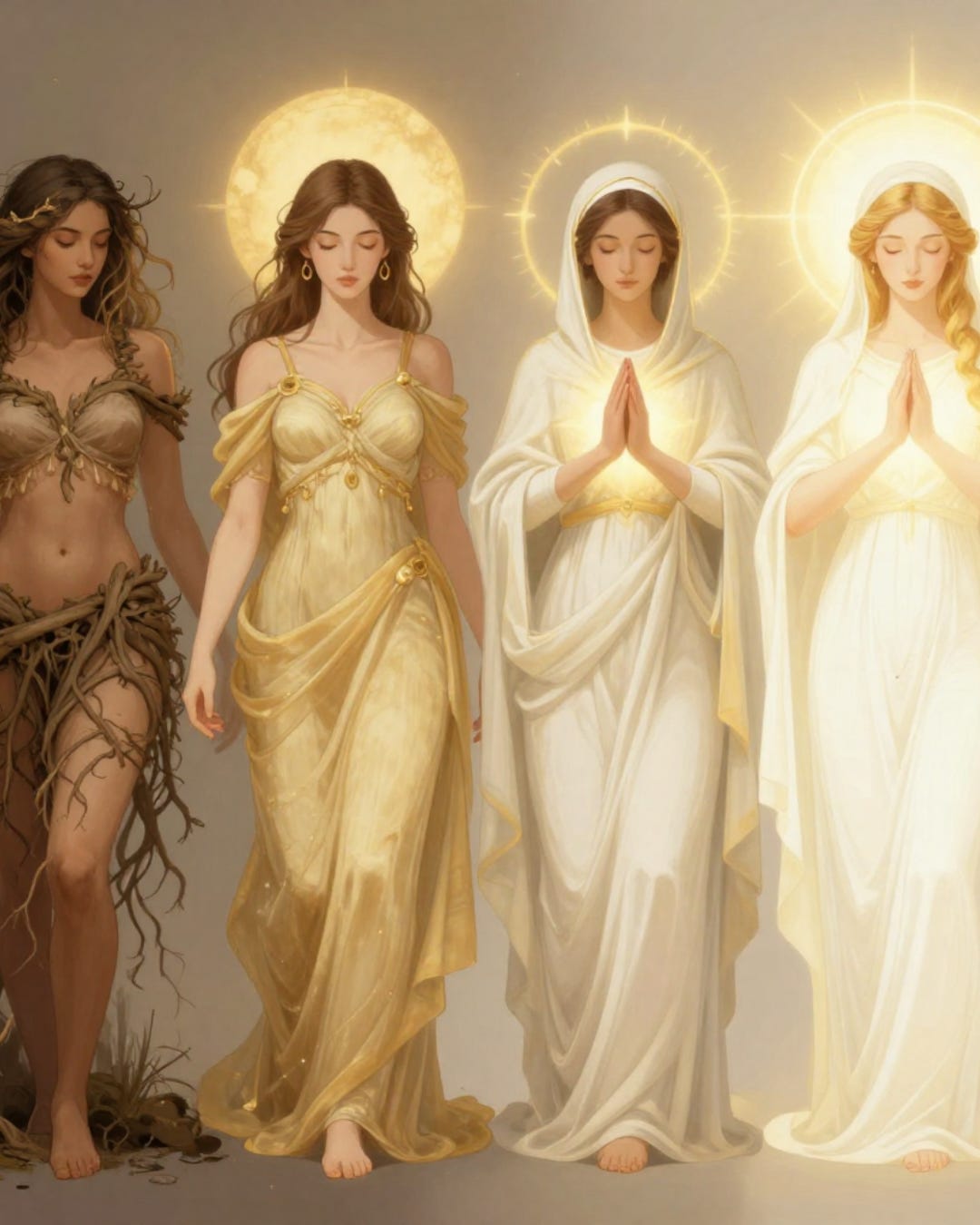
The Four Stages of the Anima
Jung observed that the anima evolves through four major stages.
Each stage reflects a deepening relationship with intuition, emotion, and the soul.
Below is a clear, grounded overview of each one.
1. Eve — The Instinctual Feminine
Core themes: survival, instinct, emotional reactivity
She represents: the primal need for safety, nourishment, and belonging
How she shows up:
mood swings
overwhelm
craving approval
fantasies of being saved
Lesson:
Feel without being consumed.
Differentiate instinct from intuition.
Empath connection:
This is the stage where sensitivity feels chaotic and confusing.
2. Helen — The Erotic / Aesthetic Feminine
Core themes: beauty, desire, inspiration
She represents: the muse, the enchantress, the spark of eros
How she shows up:
falling in love with potential
being captivated by beauty or fantasy
seeking validation through admiration
Lesson:
See through projection.
Reclaim your creative power.
Empath connection:
Intuition feels like sparks, synchronicities, attraction—but still externalized.
3. Mary — The Spiritual / Moral Feminine
Core themes: devotion, compassion, moral elevation
She represents: the healer, the saint, the moral compass
How she shows up:
a pull toward spiritual practice
a desire to uplift or serve
over-identification with being “good”
Lesson:
Integrate spirituality without rigidity or self-sacrifice.
Empath connection:
Intuition becomes gentle, devotional, guiding.
The soul begins to listen rather than chase.
4. Sophia — The Wise Feminine
Core themes: wisdom, integration, inner knowing
She represents: the inner wise woman, the soul’s voice, the feminine face of God
How she shows up:
deep intuitive clarity
symbolic dreams that teach
a sense of being guided from within
the ability to hold paradox
Lesson:
Surrender—not as passivity, but as alignment with truth.
Empath connection:
Intuition becomes the atmosphere you breathe.
This is the stage of individuation—where the inner feminine becomes a partner in consciousness.

Why the Sophia Stage Matters for Empaths
Sophia is the culmination of the empath’s evolution.
She is not emotion—she is wisdom.
Not projection—inner knowing.
Not fantasy—meaning.
Entering the Sophia stage means:
you stop chasing signs and start listening
you stop seeking answers outside and begin remembering
you stop wrestling with the unconscious and start dialoguing with it
you stop “working on yourself” and begin trusting the unfolding
Sophia restores:
meaning
balance
inner authority
connection to the unconscious
a sense of the sacred
She is the empath’s return to themselves—whole, grounded, and awake.
Understanding the anima and awakening into the Sophia stage is only the beginning. In a world where our systems are constantly bombarded—where energy is absorbed, exchanged, and taken without our awareness—we have to learn how to restore ourselves intentionally.
That means not only regulating the nervous system, but also learning to recognize who and what drains us. Discernment is part of the empath’s evolution. Without it, we leak energy faster than we can replenish it.
In the next part of this series, I’ll share simple, natural ways to recalibrate your body, soothe your system, and return to yourself again and again.
Sensitivity isn’t a weakness.
It’s a gift that becomes powerful when we learn how to protect and restore it.