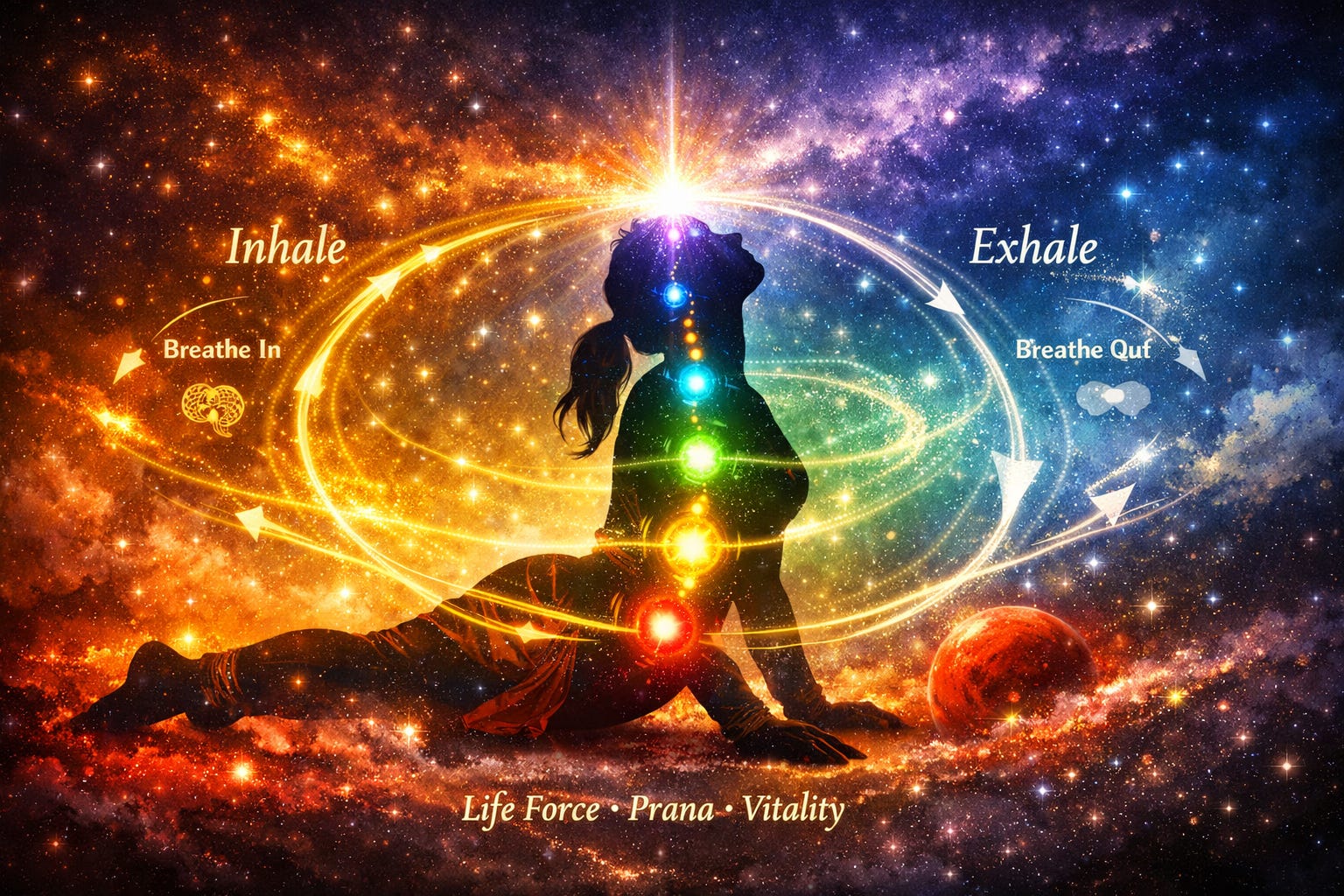
The Ancient Warrior Exercise That Transformed My Energy:
How the Dand Helped Me Reclaim My Vitality


Over the past year I’ve been on a physical healing journey—one sparked by a deep, persistent exhaustion that seemed to follow me everywhere. My energy was low, my body felt heavy, and even simple tasks drained me more than they should have.That depletion became a turning point. It pushed me to rebuild myself from the inside out, to reclaim my strength, and to explore every pathway that could help me preserve and restore my vitality.
That exploration led me into breathwork, nature immersion, yoga, mindful movement—and most recently, into a practice that kept appearing in my feeds like a quiet invitation from the past: The Dand.
What I discovered was far more profound than a trending exercise. The Dand is a piece of ancient warrior technology—an embodied bridge between yoga, martial arts, medicine, and spiritual resilience.

What Is the Dand?
The word Dand comes from Sanskrit, meaning “staff.” It is an ancient Indian calisthenic movement and a foundational exercise of Kushti, the traditional Indian wrestling system practiced for centuries in akharas (wrestling schools). At first glance, it resembles a flowing transition between two familiar yoga poses—downward dog and cobra. But its purpose runs much deeper.
The Dand was engineered as a complete training system for warriors. Pelwans (Indian wrestlers) performed hundreds of Dands daily, often paired with Baithaks (deep squats), to build strength, flexibility, endurance, and breath control—without any equipment. It was not created as a casual workout; it was designed to solve specific problems in ancient combat biology, preventative medicine, and spiritual-military integration.
Why Ancient Warriors Needed the Dand
1. Bridging Yoga and Martial Arts
Ancient Indian philosophy viewed the body, mind, and spirit as one unified weapon. Yoga offered flexibility, focus, and inner calm, but lacked explosive outward power. Heavy labor built strength but made the body rigid and breathless.
The Dand became the bridge—combining the fluidity of yoga with the force of martial arts. It trained warriors to generate power while maintaining rhythmic breathing and mental clarity.
2. Integrating the Kinetic Chain
Combat requires whole-body power: force that travels from the feet, through the hips, up the spine, and out through the hands. Isolated exercises create “energy leaks.”
The Dand’s sweeping motion knits the entire body together, teaching the kinetic chain to fire as one cohesive unit.
3. Longevity and Spinal Decompression
Warriors marched long distances, carried heavy loads, and fought for hours. This compressed the spine and tightened the shoulders.
The Dand’s architecture actively decompresses the spine and stretches the posterior chain, functioning as ancient preventative medicine to keep soldiers battle-ready.
4. Internal Organ Resilience (Prana)
Ancient physicians understood that true strength includes lung capacity, digestion, and organ resilience. Stress causes shallow breathing, panic, and rapid fatigue.
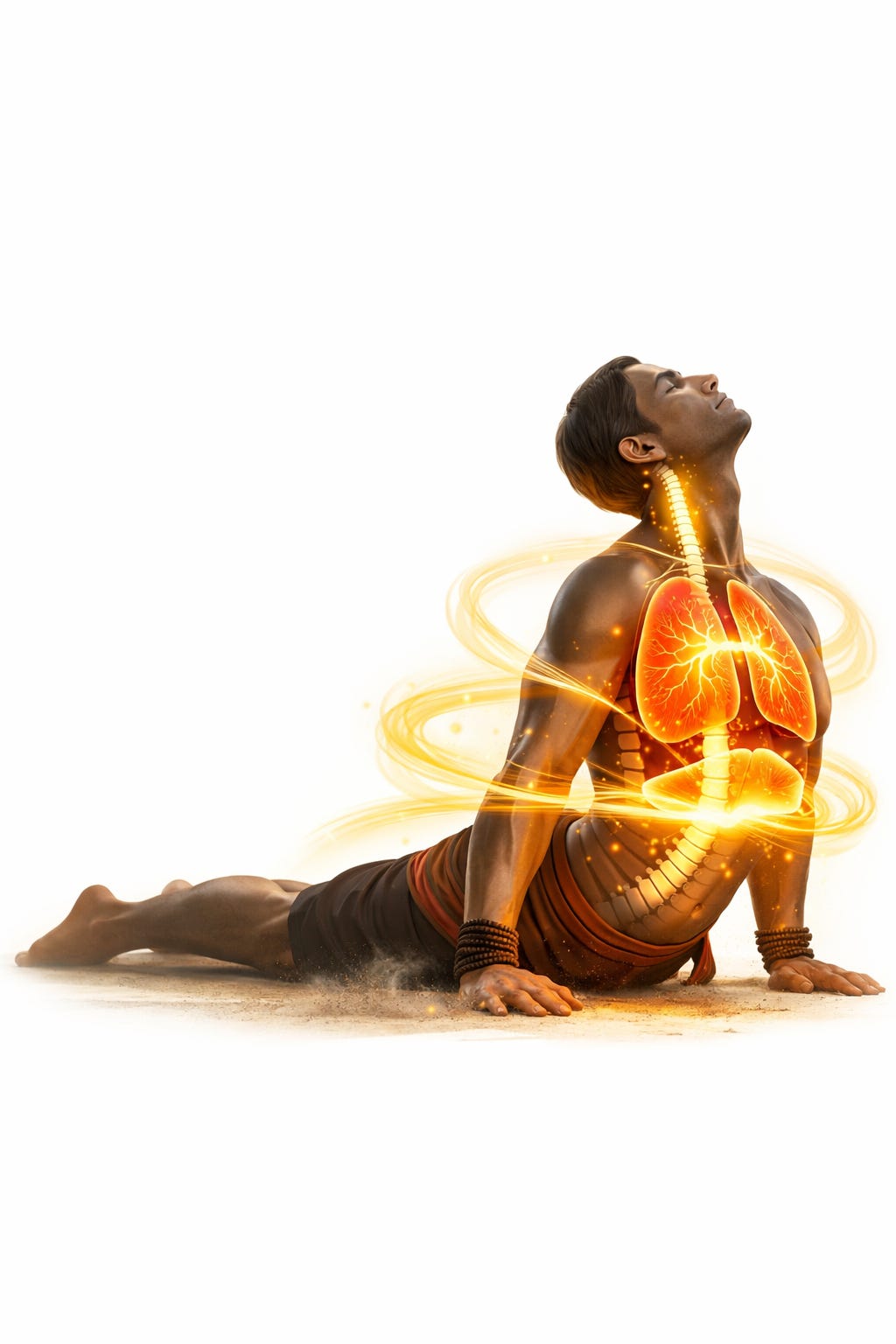
The Dand forces deep, rhythmic diaphragmatic breathing—expanding lung volume and training the nervous system to stay calm under pressure.
How the Dand Builds Prana Resilience
Prana, the vital life-force energy, must be circulated and retained—not drained. The Dand enhances prana resilience through a mechanical “accordion effect”:
Compression Phase: Inverted V-shape forces a full exhalation, clearing stagnant air.
Expansion Phase: The swooping dive and upward arch stretch the lungs and diaphragm, triggering a deep inhalation.
This rhythmic breath-movement pattern increases oxygen efficiency, stabilizes the nervous system, and builds internal endurance.
Combat Applications: Why Warriors Relied on the Dand
1. Mimicking Grappling and Striking Mechanics
The diving motion mirrors ducking under strikes, shooting for takedowns, and driving opponents backward. Rotational variations build torque for swinging heavy weapons.
2. Bulletproofing the Joints
Unlike a standard push-up, the Dand loads the shoulders through a sweeping arc, strengthening the rotator cuff and stabilizing the scapula. Ground pressure builds wrist and grip resilience.
3. Spinal Flexibility and Core Strength
The alternating flexion and extension create a whip-like spine capable of absorbing impact. Full-body tension knits the upper and lower body together through the core.
4. Breath-Movement Coordination
Warriors synchronized inhalation and exhalation with each phase of the movement, training themselves to maintain oxygen flow and mental clarity during chaos.
5. Zero Equipment, Maximum Mobility
Armies could train anywhere—mud, forest, stone—making the Dand a portable, universal conditioning tool.

The Evolution of Dand Variations
Over centuries, yogis and warriors developed specialized forms now numbered into the hundreds these are just a few examples:
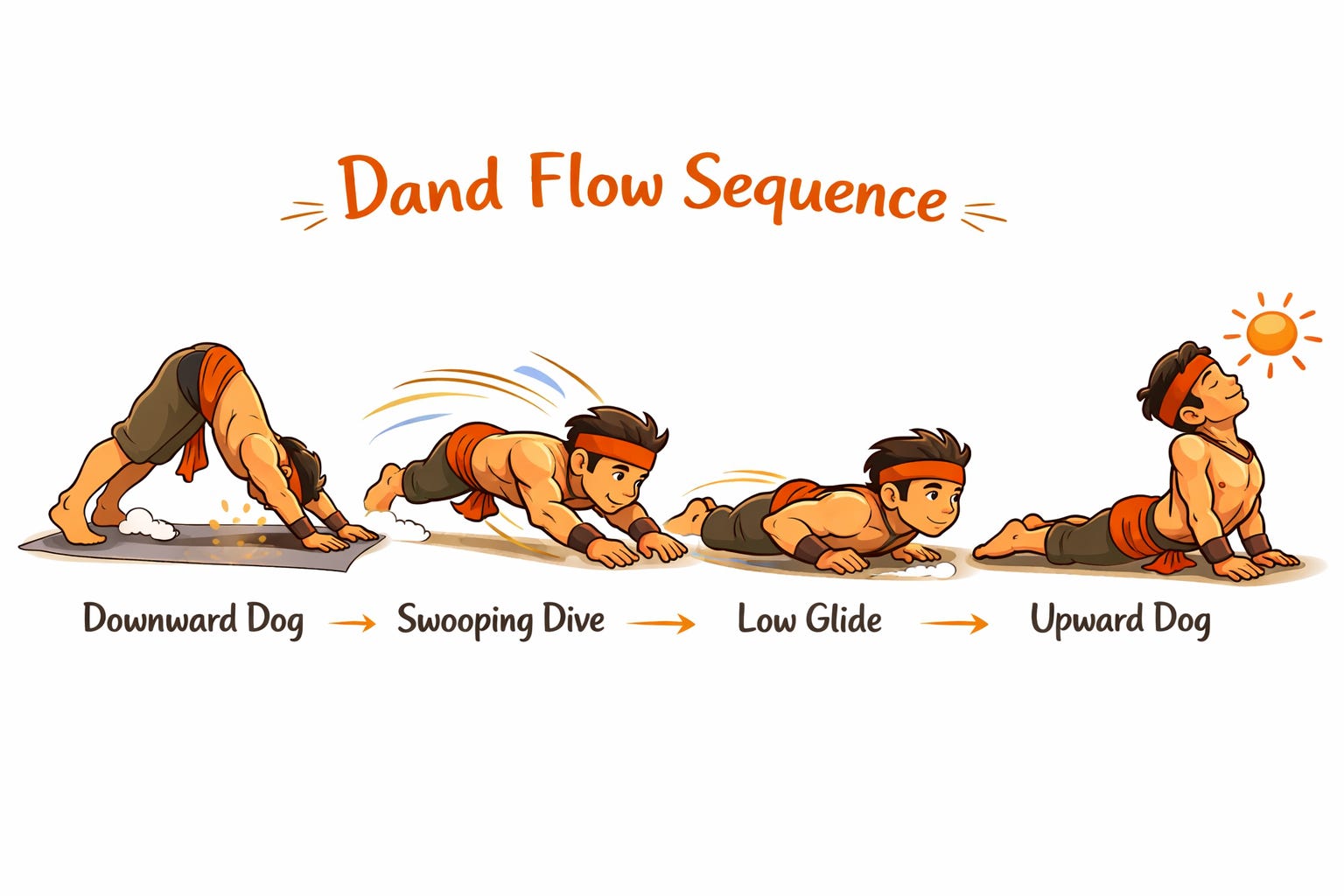
Standard Dand: The foundational downward dog → swoop → upward dog flow.
Hanuman Dand: Adds a forward step for explosive lower-body mobility.
Vrishchik (Scorpion) Dand: Raises one leg for elite balance and back flexibility.
Sher (Lion), Chakra (Circular), Parshva (Side) Dands: Target rotational power, lateral strength, and full-body coordination.
Modern Legacy
In the 20th century, the Dand traveled globally and became known as the “Hindu push-up,” popularized by Bruce Lee and wrestling coach Karl Gotch. Today, it’s recognized as a holistic alternative to the standard push-up—one that trains the spine, breath, joints, and kinetic chain in ways modern exercises often overlook.

Why This Matters for My Journey
When I restarted my workout routine—lifting weights, training almost every other day—I expected my energy to rise. Instead, I found myself exhausted, stiff, and riding unpredictable waves of fatigue. My body felt like it was constantly bracing for impact.
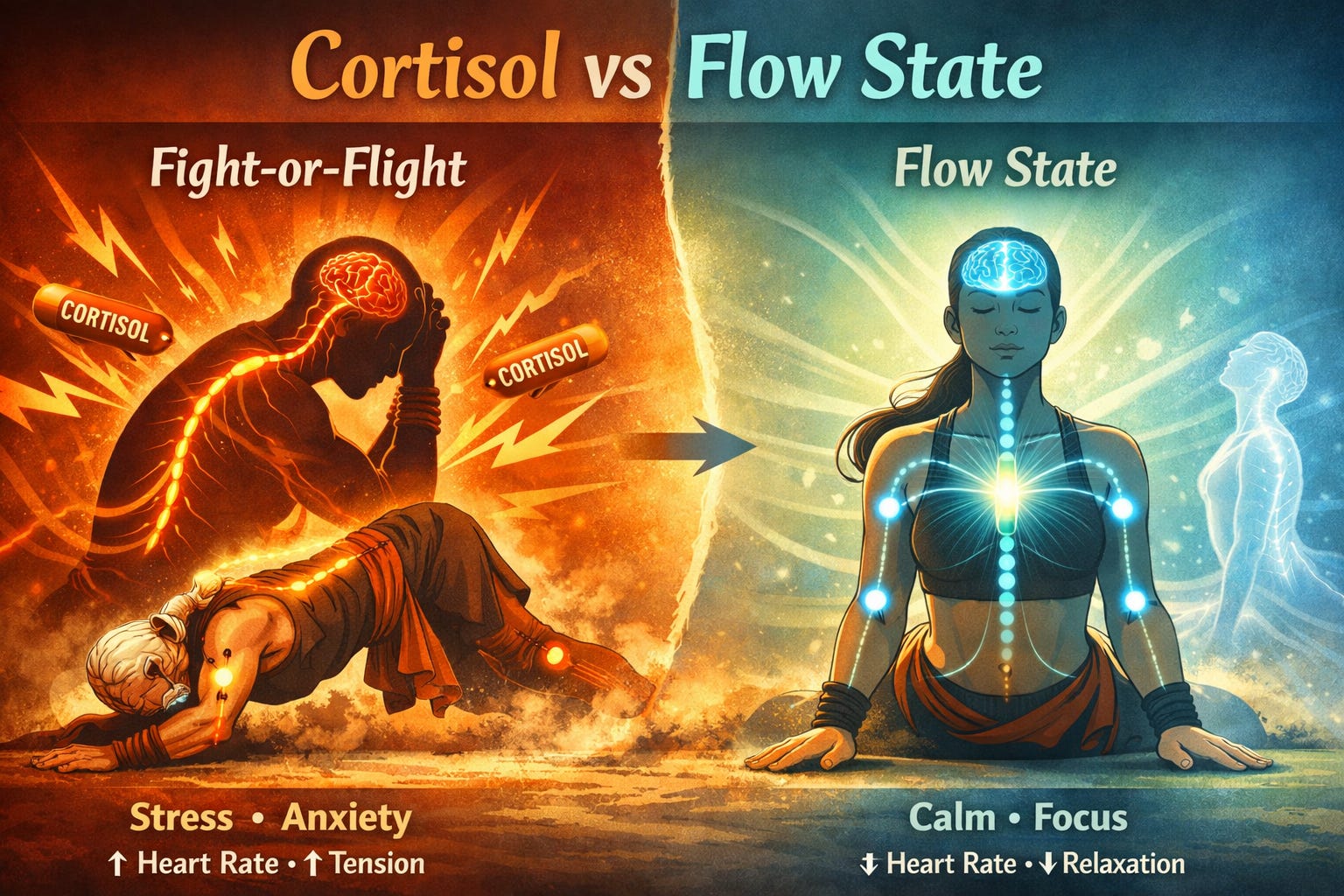
Around that time, I began learning more about cortisol, the body’s primary stress hormone. High-intensity or heavy-weight training can spike cortisol, especially when the nervous system interprets the exertion as a form of “fight or flight.” Even though exercise is healthy, certain forms of training can keep the body in a stress loop if not balanced with restorative movement.
And that’s exactly what I realized was happening to me.
My workouts were strengthening me—but they were also stressing me.
When I added Dands into my routine, everything shifted.
The dynamic, wave-like motion felt natural to my body. The rhythmic breathing calmed my nervous system. The spinal decompression relieved stiffness I didn’t even know I was carrying. Instead of feeling wrung out after training, I felt reset.
Since incorporating Dands:
my body feels more at ease
my breathing is deeper and more intuitive
my stiffness has decreased
my sleep has improved
my energy feels more stable and sustainable
It’s as if my body finally has a movement that gives energy back, instead of draining it.
The Dand has become more than an exercise—it’s become a form of physical meditation, a way to regulate my stress response, and a tool for rebuilding my vitality from the inside out.