
From Cell to Self:
The Biology and Spirituality of Becoming Someone New

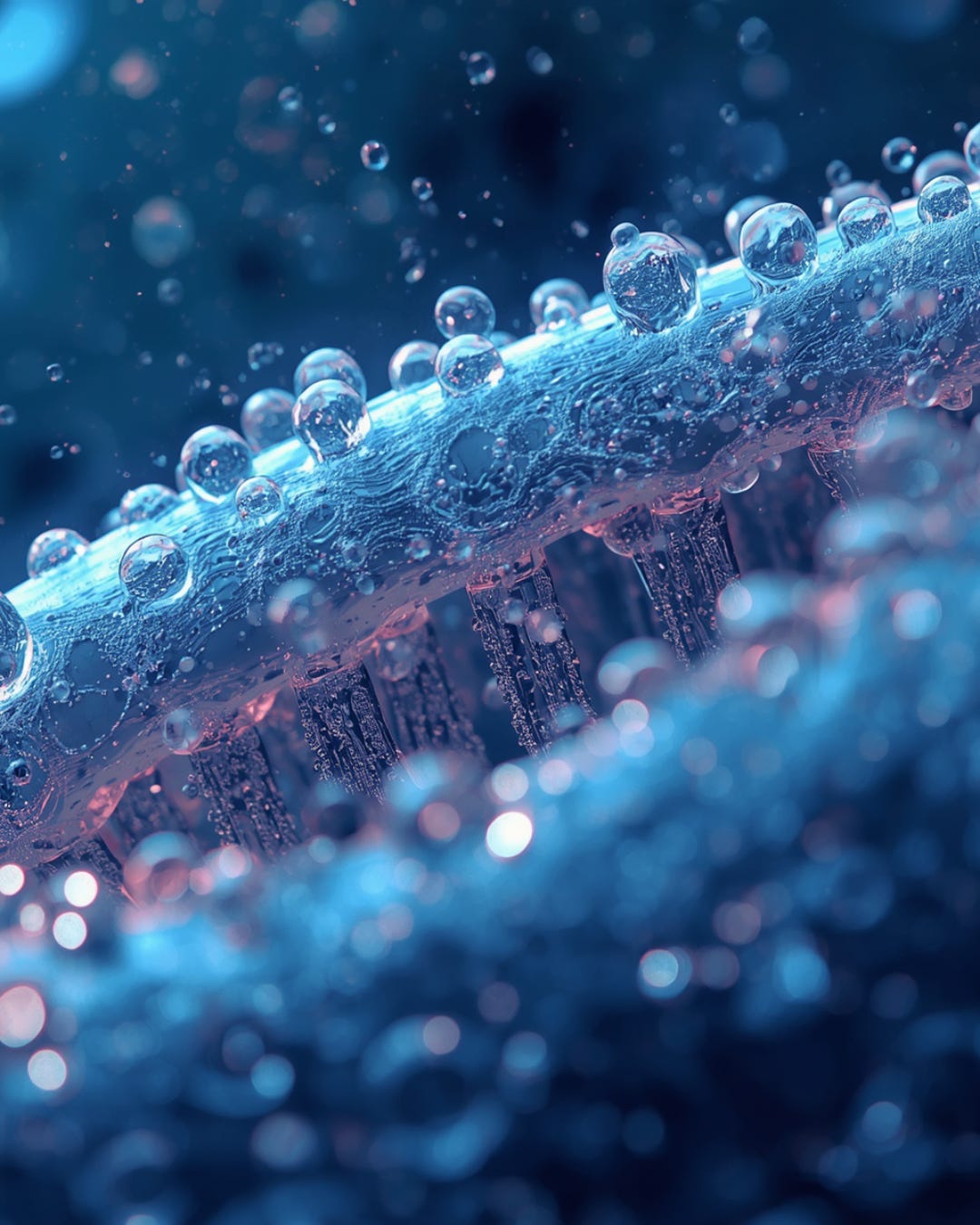
The cell is the fundamental structural, functional, and biological unit of all living organisms—capable of independent life, growth, adaptation, and division. A cell can exist as part of a vast multicellular being, like a human or an animal, or it can stand alone as a single‑celled organism complete within itself.
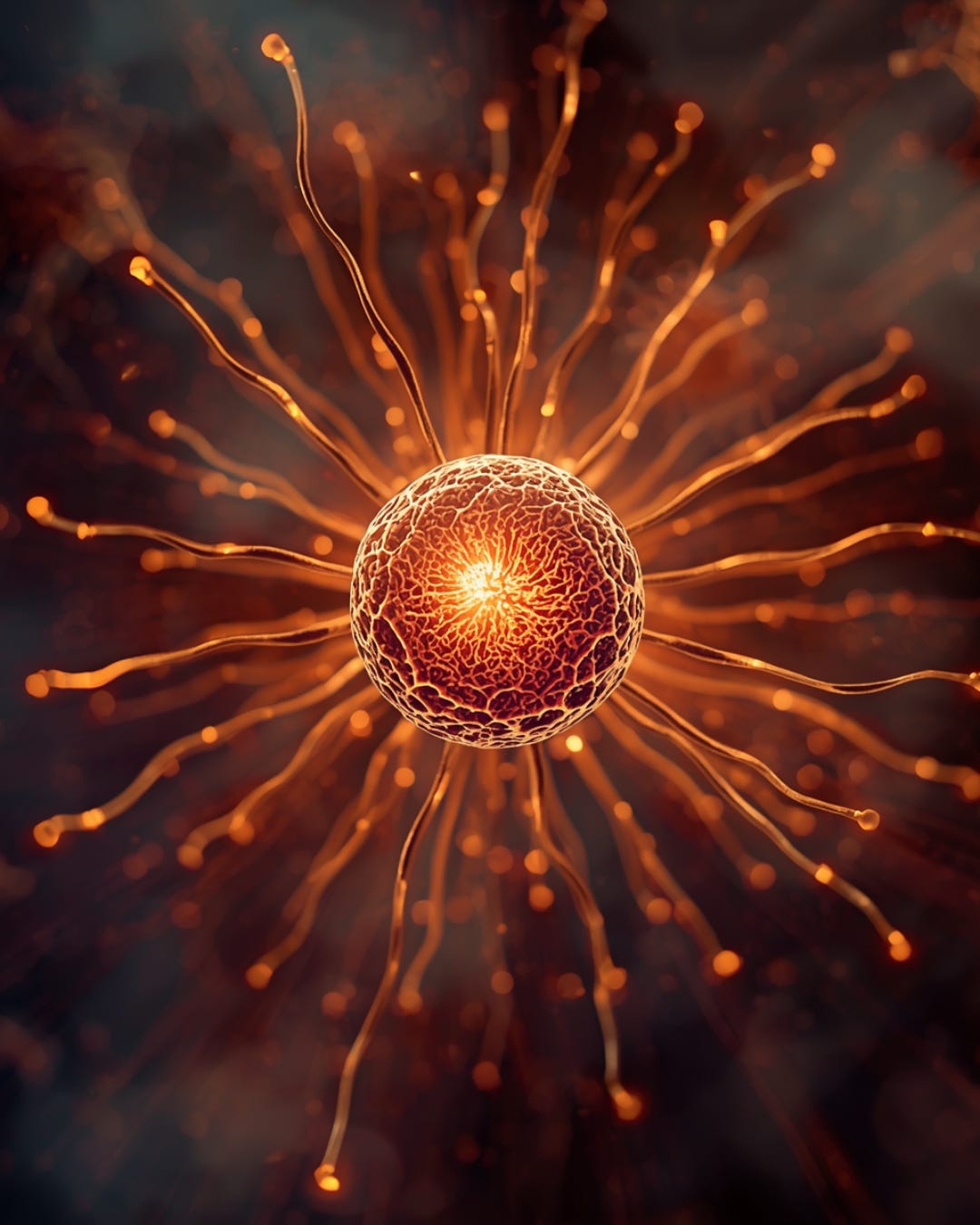
Every cell contains a cell membrane, cytoplasm, and genetic material (DNA). In eukaryotic cells—the kind that make up our bodies—this DNA is protected within a nucleus, surrounded by organelles that perform the essential tasks of life.
Different types of cells regenerate at different speeds: some renew in days, others in months, and some take years. This is where the popular idea of the seven‑year cycle comes from—the belief that within roughly seven years, most of the cells in the human body have been replaced. While the exact timing varies, the symbolism remains potent: we are always in motion, always rebuilding, always becoming someone new.
The Link Between the Cell and the Self
This is the bridge I want to explore today—the connection between the cell and the self.
The similarity in the words feels less like coincidence and more like a quiet truth.
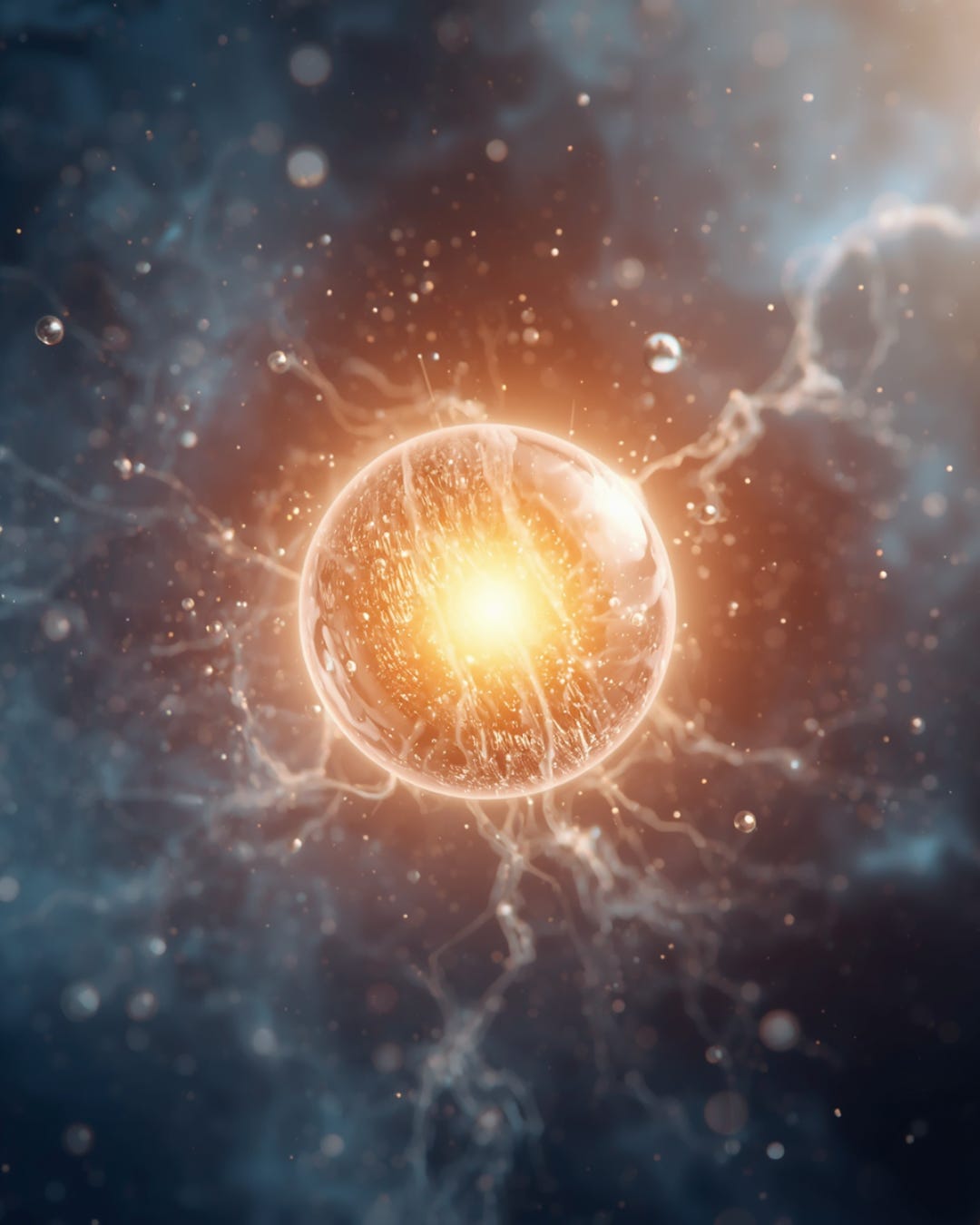
A cell has a membrane, a boundary that determines what enters and what stays out. It can be permeable—absorbing what the environment offers—or selectively guarded. We operate the same way. Our emotional and energetic boundaries decide what we allow in and what we keep out.
A cell has a nucleus, its command center, its inner intelligence. We have a mind, a consciousness, a core of knowing that guides our choices and our evolution.
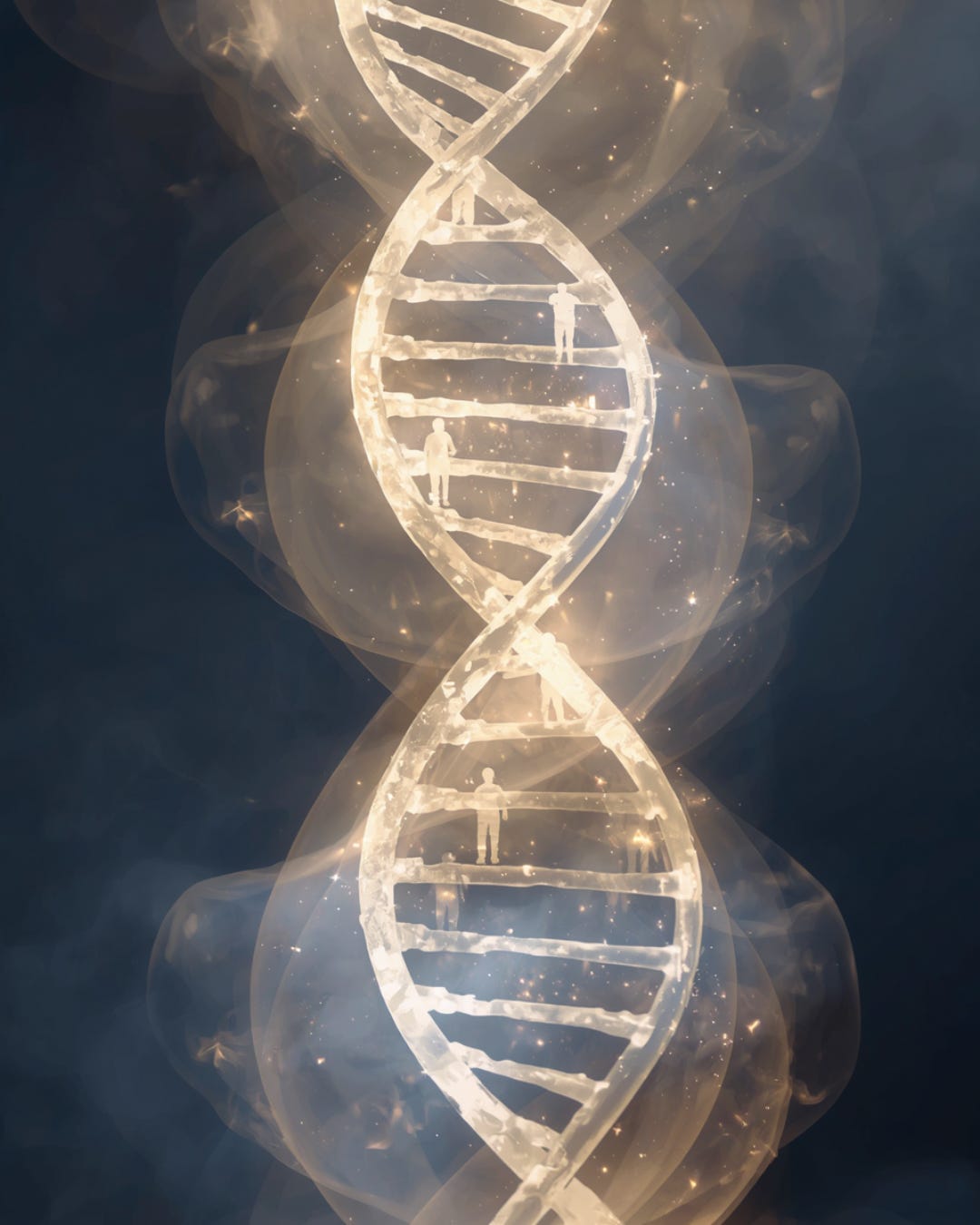
A cell carries DNA, a library of ancestral memory, instructions, and inherited wisdom. We, too, carry the stories, patterns, and imprints of those who came before us—genetically, emotionally, spiritually.
Every cell is both individual and interdependent, just like every human being.
Every cell responds to its environment, just as we do.
Every cell is capable of transformation, repair, and renewal—and so are we.
If the body is a universe, then each cell is a tiny self.
If the self is a universe, then each belief, memory, and habit is a cell—capable of dying, regenerating, or transforming.
The science mirrors the spirit.
The micro mirrors the macro.
The cell mirrors the self.
What Should Not Be Carried Into the New Self
If your cells are constantly renewing, then so is your identity. The question becomes:
What are you still carrying that no longer belongs in the next version of you?
For me, anything that disconnects me from life doesn’t make the cut—
anything that dims my energy, tightens my chest, or pulls me out of presence.
This includes:
Fears that create anxiety, stress, or chronic tension
Addictions that numb, distract, or pull you into obsession
Patterns that shrink your spirit or keep you looping in the same emotional cycles
Most of these experiences aren’t punishments—they’re invitations.
They show up to help you grow, to push you into a new level of awareness, to strengthen your inner structure the way stress strengthens a muscle.
But here’s the part many people misunderstand:
Revenge, avoidance, or reactive behavior doesn’t give you power.
It actually hands your power over to the moment, the person, or the wound.
You reclaim your power by:
Breaking old habits
Creating new pathways
Facing the challenge instead of running from it
Choosing differently, even when it’s uncomfortable
And if you don’t learn the lesson, life has a way of repeating it—gently at first, then louder, then unmistakably—until you finally evolve.
Because just like your cells, you are designed to regenerate.
You are built for renewal.
You are wired for transformation.
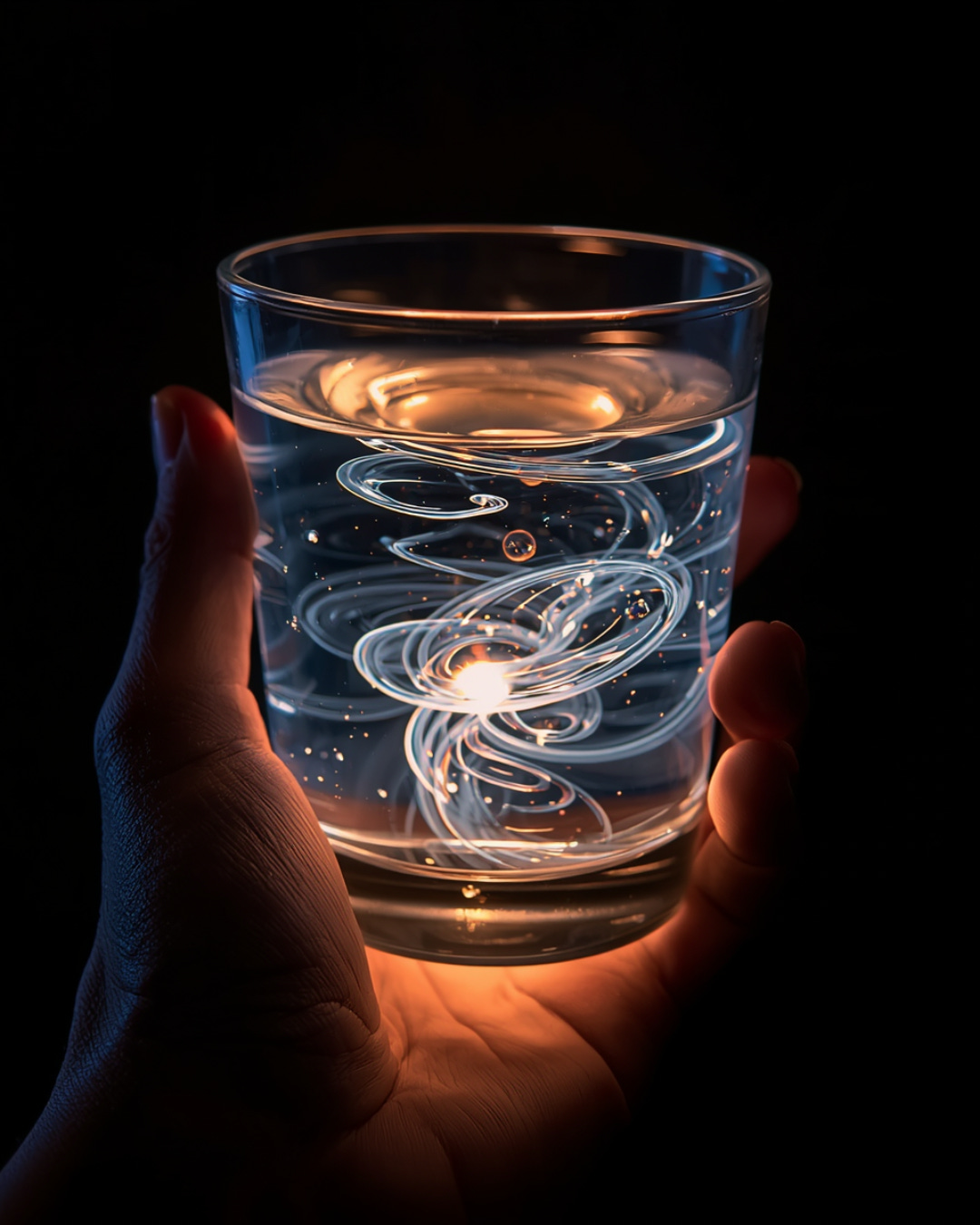
A Closing Ritual: Regeneration Through Water
To seal this work, I want to offer a simple ritual—one that uses the most ancient element of renewal: water.
First, imagine yourself thirsty. Not casually thirsty, but parched—dry throat, lips cracking, body calling out for hydration.
Feel that longing. That need. That instinctive pull toward nourishment.
Now hold your glass of water.
Water is impressionable. It responds to intention, vibration, and sound. Before you drink, speak into your water. Tell it what you are ready to regenerate, what you are ready to renew, what you are ready to release.
You might say:
“I am regenerating my courage.”
“I am renewing my clarity.”
“I am releasing fear.”
“I am restoring my vitality.”
Let your voice imprint the water.
Let your intention become a frequency.
Then drink—slowly, consciously, gratefully.
Feel the water enter your body and imagine it carrying your intention into every cell, every membrane, every nucleus.
Let it become part of your internal landscape.
Let it remind your body of what it already knows how to do: renew, repair, and rise again.
Close the ritual with a simple thank you—to the water, to your body, to the self you are becoming.
Pau d’Arco: A Botanical Ally for Cellular Renewal
Another resource worth knowing is Pau d’Arco, a powerful herb derived from the inner bark of the Tabebuia tree. Traditionally used in South American healing systems, Pau d’Arco is known for its ability to support the body at a deep, foundational level.
What makes it especially relevant here is its connection to cellular regeneration.
Pau d’Arco contains compounds—such as lapachol and beta‑lapachone—that interact with the body at the mitochondrial level, the very place where energy is produced and cellular repair begins. Mitochondria are often called the “powerhouses” of the cell, but they are also the keepers of vitality, the engines of renewal.
Supporting mitochondrial function means supporting:
Energy production
Cellular repair
Detoxification
Immune resilience
Overall vitality
Pau d’Arco has long been used to help the body clear what no longer serves it—stagnation, heaviness, old patterns held in the tissues. It is a plant that reminds the body how to regenerate from the inside out.
Think of it as a botanical companion on your journey of renewal—another way to honor the connection between the cell and the self.